
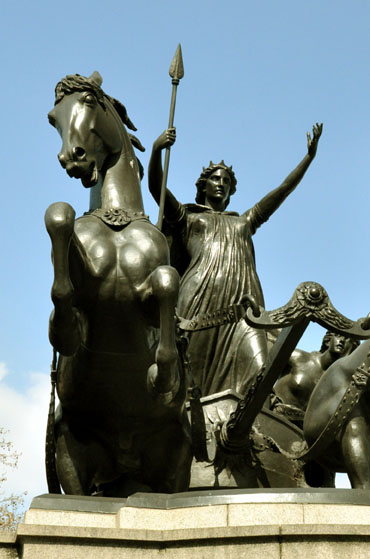
 The grand bronze statue by Thomas Thornycraft commemorating Boudicca was placed at Westminster Bridge near the Houses of Parliament in 1902. Boudicca has long been considered an icon of national resistance. She was a favorite subject for Victorian painters and sculptors and a heroine for early feminists. Around 61 AD, Boudicca was Queen of the Iceni people of Eastern England. Following the death of her husband, Roman invaders annexed his land, plundered his chief tribes men, flogged his Queen, and raped her daughters. In retribution, Boudicca launched the most serious uprising faced by the Romans during their occupation of Britain. She charged into battle in a horse-drawn chariot and sliced the heads off her enemies. Boudicca’s warriors successfully destroyed Roman Britain at Colchester, London, and St. Albans. Roman historians claim that up to 70,000 people died in her path, and when she was finally defeated, Boudicca is thought to have poisoned herself to avoid capture. It is rumored that her body lies between Platforms 9 and 10 of London’s King’s Cross station. (www.guardian.co.uk and bbc.co.uk)
- Boudicca Statue
- Victoria Embankment, Westminster Bridge, London SW1
- Underground: Westminster